A mesh is a surface made of flat faces that share their corners: triangles, quadrilaterals. It is how a shape is built with flat glass, panels or folded sheet, and how free shapes are modelled by subdivision. These nodes are copper on the canvas.
Geometry and topology. In a mesh, the points say where the corners are (its geometry) and the faces say how they are joined (its topology). Move a point and the faces follow; the order of the corners of a face says which side is its front.
Make a mesh
Section titled “Make a mesh”Mesh surface
Section titled “Mesh surface”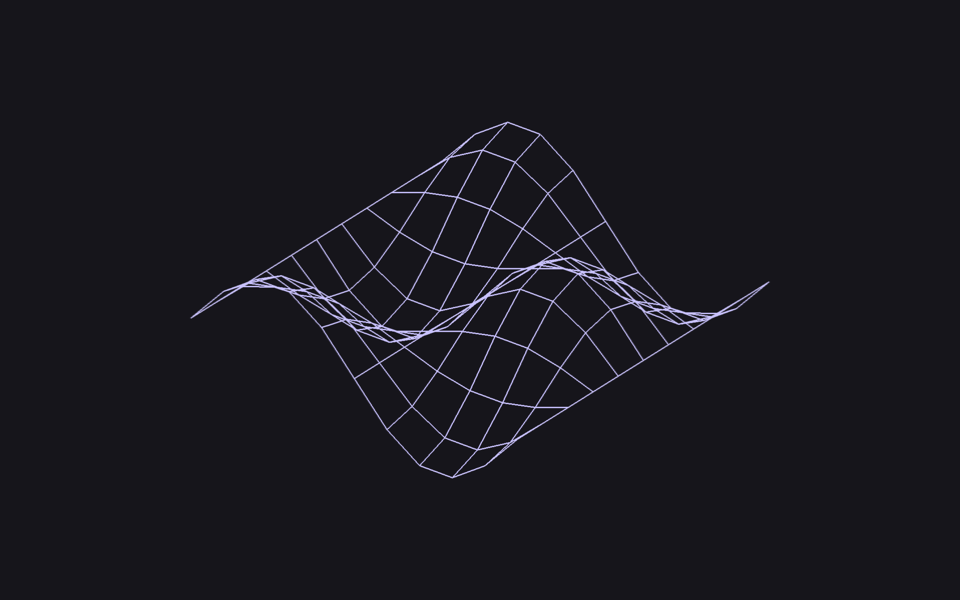
What for. A surface as one mesh of quadrilaterals sharing their corners. On a surface of revolution or of translation, the quadrilaterals come out flat: panels that can be built with flat glass.
| Input | What it means |
|---|---|
| surface | a surface, or a rectangle |
| count u, count v | faces across and up |
Delaunay
Section titled “Delaunay”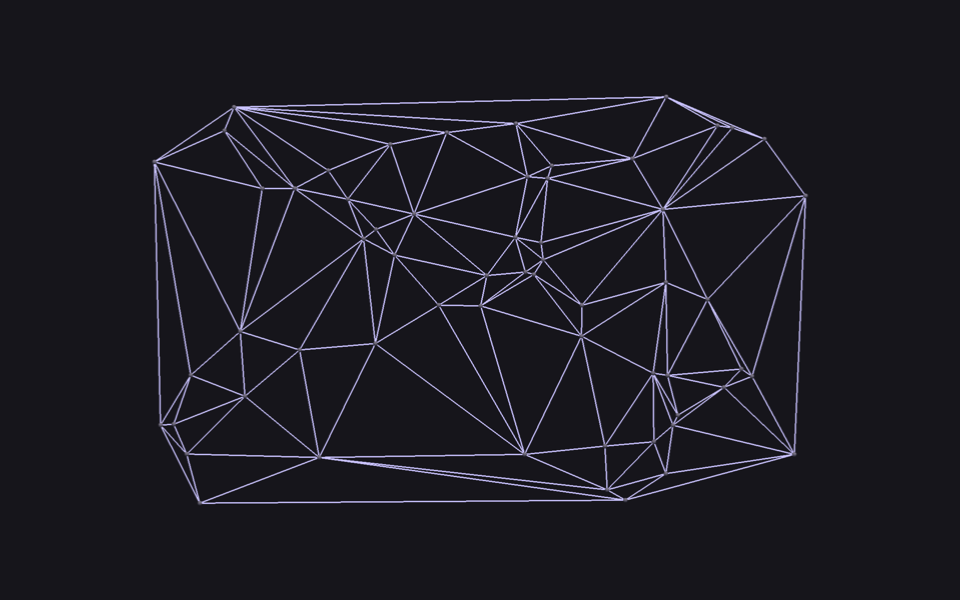
What for. To join points in triangles as even as possible, without thin ones: a terrain from survey points, a skin of triangles, pyramids on the cells of a Voronoi.
| Input | What it means |
|---|---|
| points | the points to join; with other levels, one group for each |
| more | optional: a point added to each group, like the raised centre of a cell to make a pyramid |
What for. A mesh written by hand, from its corners and its faces: to understand meshes, or to build a precise piece.
| Input | What it means |
|---|---|
| points | the corners, numbered from 0 in order |
| faces | the corners of each face, ; between faces: 0 1 2; 2 1 3 (two triangles), 0 1 2 3 (a quadrilateral) |
Tips.
- Write the corners of each face counter-clockwise, seen from the front.
Join meshes
Section titled “Join meshes”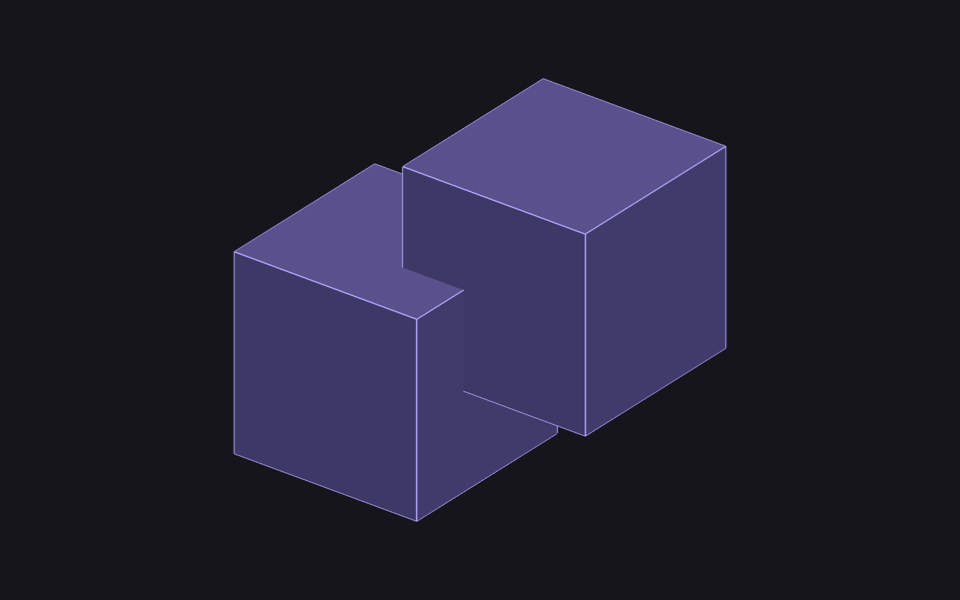
What for. Everything with faces as one mesh. Welded, the faces that touch share their corners and become one piece, which is what smoothing needs.
| Input | What it means |
|---|---|
| a … h | meshes, or anything with faces: boxes, panels, frames, surfaces |
| weld | yes: corners that touch become one |
| doubled faces | leave or remove: removing them turns a group of boxes into its outer skin |
Tips.
- Where the edges of two parts do not meet corner to corner (a T-node), they do not weld. Mesh edges with naked shows those seams.
Change it
Section titled “Change it”Smooth mesh
Section titled “Smooth mesh”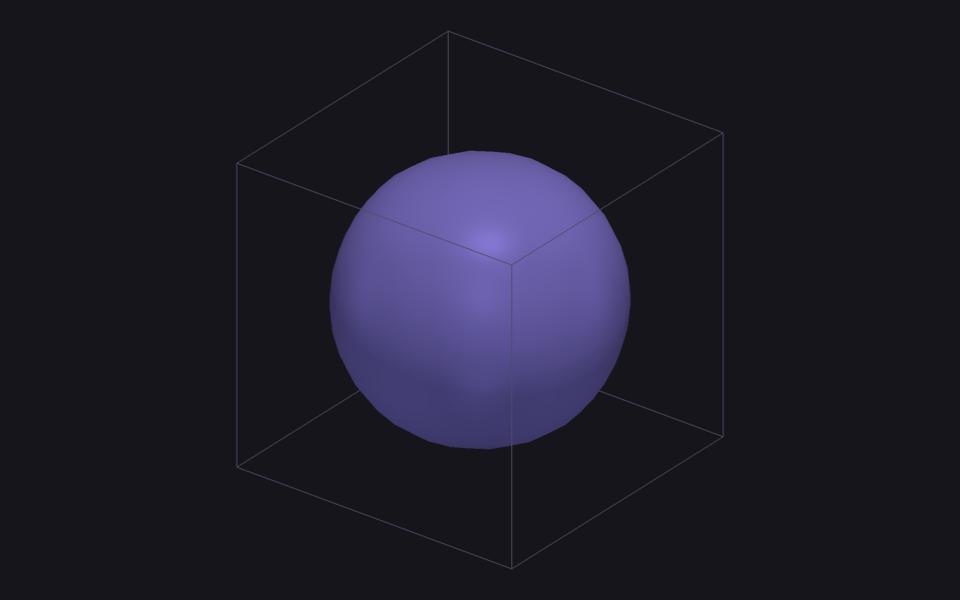
What for. A smooth mesh from a simple one: model the shape with a few faces, and let the levels round it. A table, a pavilion, a free form.
| Input | What it means |
|---|---|
| method | Catmull-Clark (any faces, they become quadrilaterals) or Loop (triangles) |
| levels | how many times it subdivides: each level about four times the faces |
| border | smooth, fixed or corners fixed |
Tips.
- For a shape of several parts, join and weld them first.
Edit mesh
Section titled “Edit mesh”What for. To shape a mesh by hand: in the 3D view, choose its corners and drag them (Alt: up or down). Only the moves are kept, so if the mesh that comes in changes, the edits stay.
Tips.
- Edit mesh followed by Smooth mesh is the way to model a free shape: a coarse cage moved by hand, and the levels round it.
Triangulate
Section titled “Triangulate”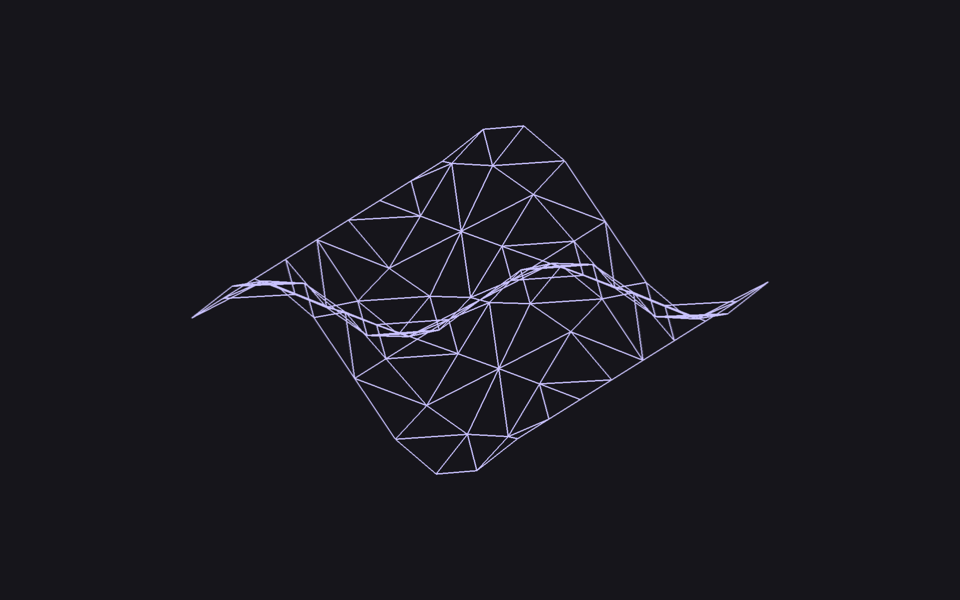
What for. Every face as triangles, each quadrilateral split by a diagonal. Triangles are always flat.
| Input | What it means |
|---|---|
| diagonal | the shorter one, or always the first (0-2) or the second (1-3) |
Flip faces
Section titled “Flip faces”What for. To turn faces over, so the front becomes the back: to make all the faces of a mesh look the same way.
| Input | What it means |
|---|---|
| which | the faces to turn (1 · 0 3); empty: all |
Read it
Section titled “Read it”Mesh faces
Section titled “Mesh faces”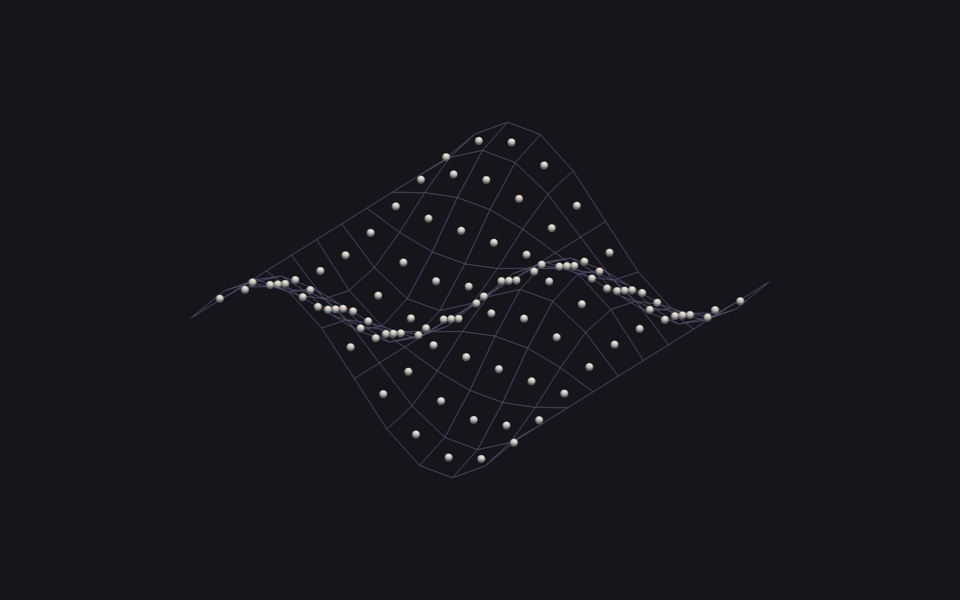
What for. To read each face of a mesh: its outline, its centre, its normal, how many sides it has, whether it looks the same way as its neighbours, or how flat it is.
| Input | What it means |
|---|---|
| what | outlines, centres, normals, sides, orientation (+1 like its neighbours, −1 turned over) or flatness |
Mesh edges
Section titled “Mesh edges”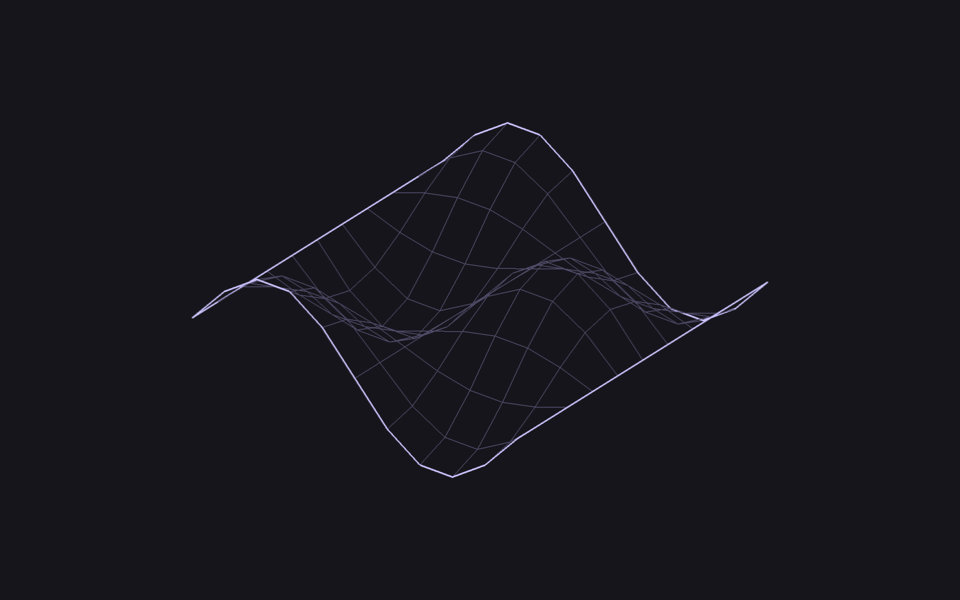
What for. The edges of a mesh as lines: its border, or the bars of a structure along its edges.
| Input | What it means |
|---|---|
| which | naked (used by one face: the border, or a seam that did not weld), inner (shared) or all |